

Floods, thunderstorms, torrential rain... Anyone living in Portugal knows that the weather can bring some less pleasant surprises. And when the water starts knocking at the door - literally - it's essential to be prepared.

In recent weeks, Portugal has been affected by a period of atmospheric instability, marked by persistent rain, floods, episodes of intense precipitation, and sometimes strong winds. In several regions of the country, the soils are already quite saturated, increasing the risk of even more floods, urban flooding, and infiltrations in homes, especially in lower areas or with less effective drainage systems.
For the coming days, weather forecasts indicate the continuation of this unstable pattern, with new periods of rain and locally heavy showers, making it even more urgent to adopt preventive measures. In this context, preparing your home to face the rain is not just a matter of comfort, but also of protecting property and reducing potential losses.
Whether it's a ground floor house, a house with a garden, or simply to avoid unpleasant surprises during typical winter showers, this guide presents practical and uncomplicated tips so that when the sky opens, you can face the situation with greater peace of mind.
Attention: If the house has already suffered a flood in the past, the risk of it happening again is higher. In these cases, investing in drainage and waterproofing is not a "cost": it is prevention.
PRACTICAL GUIDE TO PROTECT YOUR HOME FROM RAIN, FLOODS, AND INFILTRATIONS:
Index
- 1. How to Protect the Interior of the House Against Floods and Inundations
- 2. Exterior Protection of the House Against Intense Rain and Floods
- 3. Preparing the Home Before Winter Showers
- 4. What to Do During Heavy Rains and Flood Situations
- 5. What to Do After a Flood or Inundation at Home
- 6. Permanent Solutions for Homes in Flood Risk Areas
- 7. Practical Tips to Prevent Rain Damage in the Home
- Advanced Solutions to Make Your Home Water-Resistant
- Conclusion: The Importance of Prevention Against Rain, Floods, and Infiltrations
1. How to Protect the Interior of the House Against Floods and Inundations(Top▲)
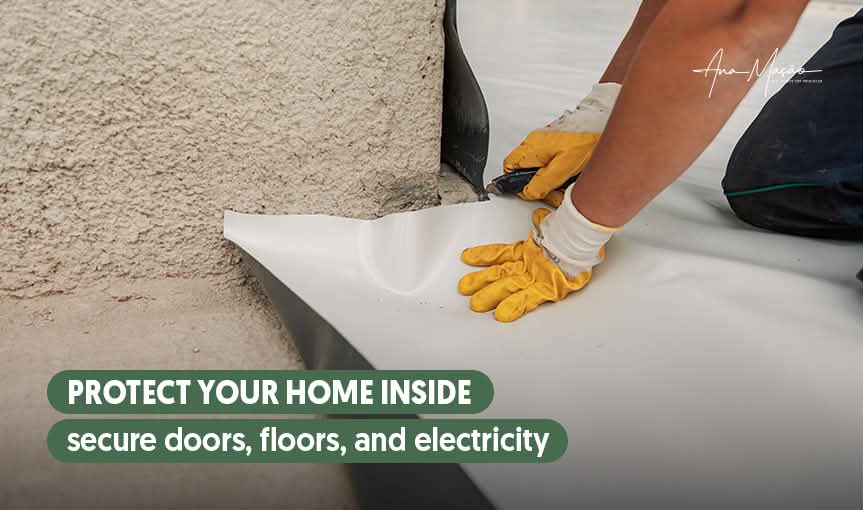
1.1. Sealing Doors and Windows to Prevent Water Entry
Doors and windows are the most vulnerable points. Here are some effective solutions:
- Barrels or sandbags: classic and effective method to block water entry.
- Anti-flood protection bars: metal solutions that create a watertight barrier.
- Sealing rubbers: should be in good condition and replaced if worn.
- Silicone or sealing putty: useful for small cracks and gaps.
1.2. Suitable Flooring and Coverings in Flood-Prone Areas
The type of flooring also influences the impact of water:
- Avoid carpets on the ground floor, especially in flood-prone areas.
- Waterproofing basements and attics whenever possible.
- Creating small slopes at entrances during renovations or remodels.
1.3. Electrical Safety and Appliances in Case of Flooding
Water and electricity represent a serious risk:
- Raise the level of appliances whenever possible.
- Electrical outlets installed above ground level in risk areas.
- Electrical panel installed in an elevated and protected location.
- Immediately cut off electricity in case of flooding.
2. Exterior Protection of the House Against Intense Rain and Floods(Top▲)
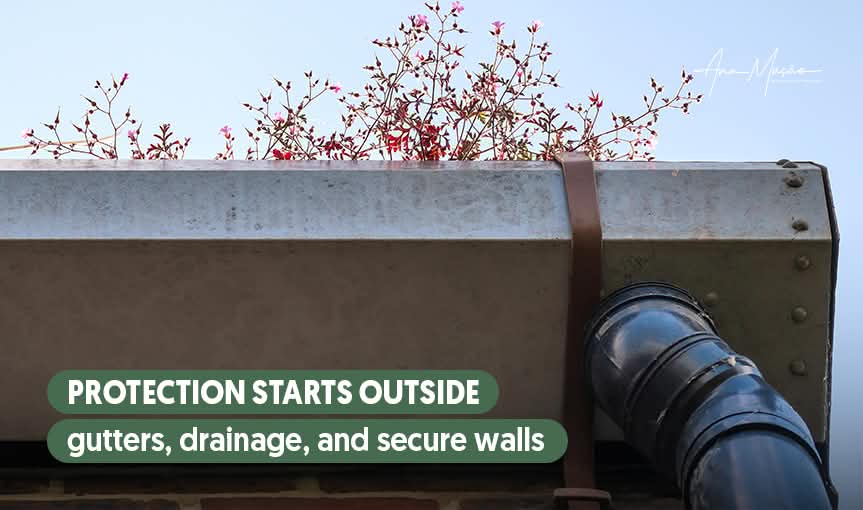
2.1. Maintenance of Gutters and Drains to Prevent Infiltrations
Basic but essential maintenance:
- Regular cleaning of gutters, especially in autumn and spring.
- Checking joints and elbows to prevent leaks.
- Ensure robust and larger conduits, capable of handling stronger flows.
- Diverting water away from the house's foundations.
2.2. Drainage of Patios, Gardens, and Land in Risk Areas
The surrounding terrain plays a crucial role:
- Ensure a natural slope, directing water away from the foundation.
- Install drains and grates in lower points.
- Use of gravel or stone in drainage areas.
- Drainage ditches or underground systems in cases of recurring water retention.
2.3. Walls, Fences, and Rainwater Drainage
- Openings at the base of walls to allow drainage.
- Gates with lower clearance to allow rainwater drainage.
- Proper waterproofing of retaining walls.
3. Preparing the Home Before Winter Showers(Top▲)

Quick checklist before the first showers
- Clean gutters and drains
- Check tiles and infiltration points
- Test drainage
- Review sealing rubbers
- Confirm insurance coverage
3.1. Preventive Maintenance of the House Against Rain and Humidity
- Annual roof inspection.
- Repair of cracks in walls.
- Application of waterproof paint.
- Maintenance and cleaning of sewage boxes or pits.
3.2. Essential Materials and Equipment in Case of Floods
- Preventive storage of sandbags.
- Resistant tarps or plastics.
- High-strength adhesive tape.
- Submersible water pumps.
- Generators or emergency batteries
Attention: NEVER use diesel generators indoors or in garages. The risk of death from carbon monoxide poisoning (an invisible and odorless gas) is extremely high, even with open windows.
3.3. Home Insurance and Important Documentation in Flood Situations
- Multi-risk insurance with flood coverage.
- Photographic inventory of your belongings.
- Documents and valuable goods stored in a watertight and elevated location.
Real estate note: In buying or renting processes, signs of humidity, mold, or infiltrations should not be underestimated, as they may indicate structural problems or significant future costs.
4. What to Do During Heavy Rains and Flood Situations(Top▲)
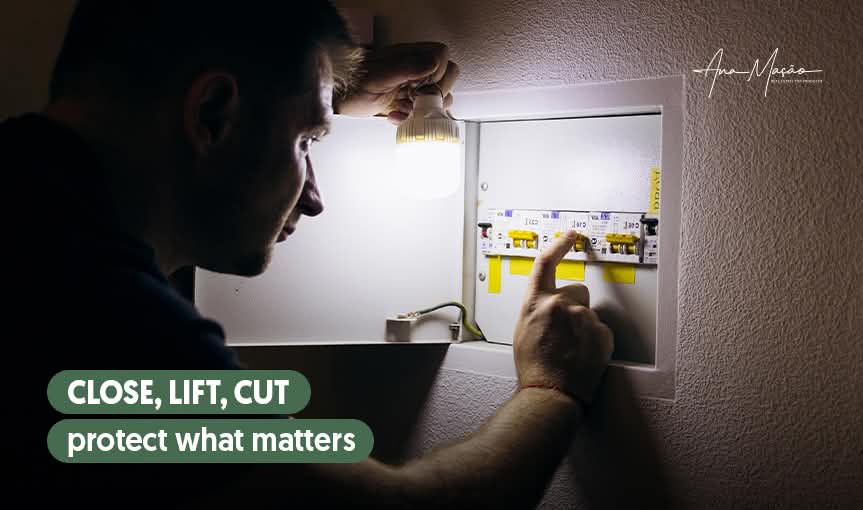
- Close doors and windows.
- Elevate valuable objects.
- Preventive electricity cut-off, if necessary.
- Monitoring of basements and low areas.
- Reduction of network water usage.
- Compliance with authorities' instructions.
5. What to Do After a Flood or Inundation at Home(Top▲)
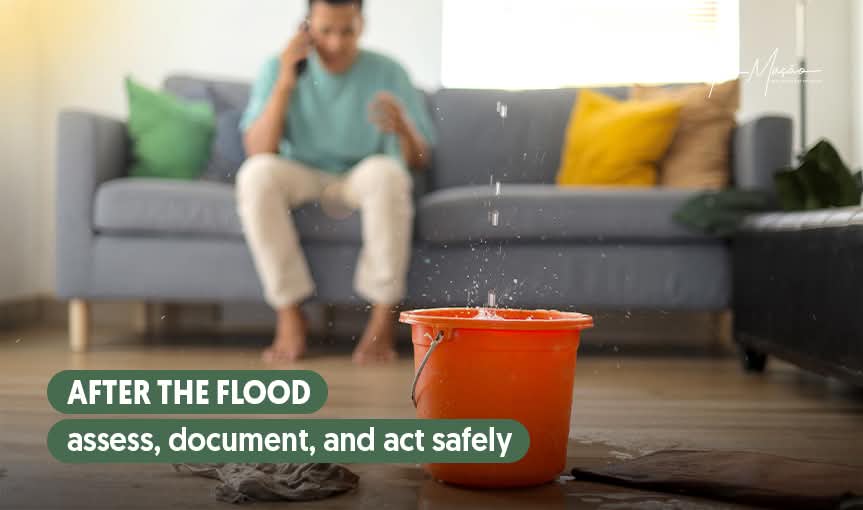
After a flood or inundation episode, it is essential to act methodically and with some caution. Even when apparent damage seems limited, water may have affected structures, installations, and materials in less visible ways.
- Complete assessment of the damage.
- Photographic record for insurance purposes.
- Quick drying to avoid mold (use the dryer in cold air mode for wooden floors).
- Cleaning and disinfection of affected areas, as floodwater may contain residues and contaminants.
- Natural ventilation, dehumidifiers, and fans help speed up the process.
- Structural verification of the home
The first step should be to assess the situation safely, confirming that there are no electrical or structural risks. Whenever possible, electricity should be restored only after technical verification. Next, it is important to document all damage with photographs before starting any cleaning, especially for insurance purposes.
6. Permanent Solutions for Homes in Flood Risk Areas(Top▲)

If your home is located in an area with a history of floods or recurring inundations, temporary solutions may prove insufficient in the medium term. In these cases, it makes sense to consider structural and permanent measures that significantly reduce the risk, such as:
• The installation of effective drainage systems, such as underground drains or automatic pumping pumps in basements, is one of the most common solutions.
• In more demanding situations, the construction of retaining walls, the creation of water retention areas on the land, or the partial elevation of floors and access may be justified.
• If you have a garden, landscaping can also play a relevant role. The choice of suitable plant species and the organization of the land help absorb water and control its drainage.
Although these interventions involve investment, they contribute to the safety of the house and the preservation of its property value over time.
7. Practical Tips to Prevent Rain Damage in the Home(Top▲)
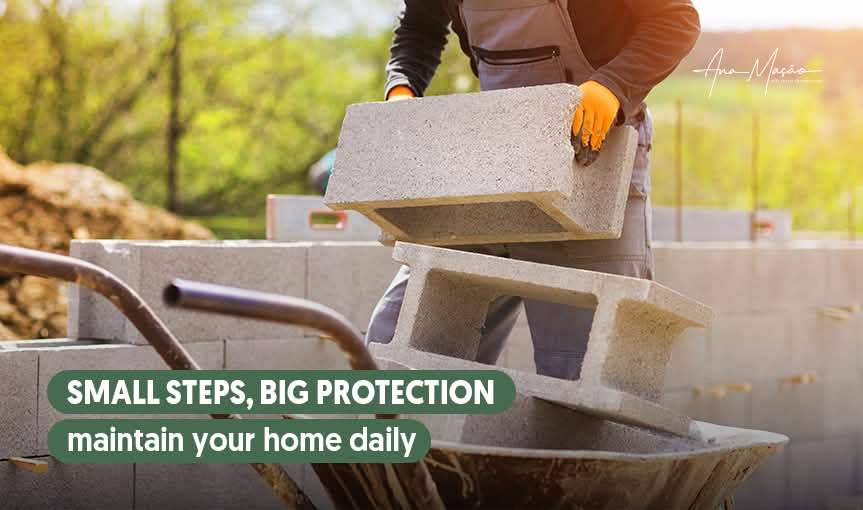
Major works are not always necessary to reduce the impacts of rain on a house. Often, small regular actions make a significant difference, especially when applied consistently.
The periodic cleaning of gutters, drains, and drainage boxes, checking the condition of the covers, and paying attention to small cracks in the exterior walls are examples of simple but effective tasks, as well as the timely replacement of sealing rubbers on doors and windows to prevent infiltrations and comfort losses.
It is also advisable to follow weather forecasts and act preventively whenever periods of intense rain are announced, thus reducing the risk of unexpected damage.
Advanced Solutions to Make Your Home Water-Resistant(Top▲)

What is injection chemical barrier and how does it work?
This technique creates horizontal waterproof barriers without demolition works. Holes of 10-12 mm are drilled at the base of the walls (spaced 10-15 cm) and creams based on silanes are injected. In Portugal, KÖSTER Portugal (Porto) offers the KÖSTER Crisin 76 Concentrate system, applied without pressure through "Capillary Rods". Sika Portugal markets the SikaMur® InjectoCream-100, applicable with a simple caulking gun. Topeca also distributes Silitop Barrier for injection in masonry.
How does the curtain grouting technique work?
Ideal for historic buildings or severe infiltrations, it involves drilling the wall along its length and injecting acrylic gels or polyurethane resins that form a waterproof membrane on the outside. It does not require external excavations, making it perfect for terraced houses. In Portugal, companies specializing in structural injection use products from Mapei Portugal or Sika for these deep injection solutions.
What is self-healing concrete by crystallization?
Additives with active crystalline compounds that, in contact with water, form insoluble crystals filling capillaries and cracks. Penetron Ibérica (Entroncamento) is the official representative of the Penetron system in Portugal and Spain. Xypex Portugal distributes similar active crystallization technology that remains functional for decades, sealing new micro-cracks over time.
Are there invisible waterproofing solutions?
Yes. Rebotec Europa markets in Portugal a 100% mineral waterproofing agent based on nanotechnology, added to concrete (4% of cement) to create permanent protection. Neotex Portugal (in the market since 1959) provides advanced polyurea and epoxy solutions, while Resolve Já applies nanotechnology in surface treatments.
How to protect the house from floods without permanent works?
There are modular systems in aluminum or ABS that are installed on doors and garages only when necessary. Manutan Portugal markets removable barriers, anti-flood bags (Floodsax®), and water-activated flexible barriers (Quickdam®). Ideal for seasonal risk areas, they allow total protection during periods of intense rain without compromising aesthetics for the rest of the year.
Is there effective but discreet drainage for gardens and terraces?
The ACO Slot 8 is a drainage channel with stainless steel slots of only 8mm, practically invisible. ACO Grupo Iberia operates in Portugal (contact: +351 224 905 271) offering "Slot" drainage systems for discreet integration in pavements. As an ecological alternative, infiltration trenches filled with gravel and geotextile function as invisible underground drainage that recharges the aquifer.
How to prevent rainwater from returning inside the house?
The installation of check valves in drainage systems prevents backflow during urban floods. JV Química distributes TIDEFLEX check valves, ideal for maritime or river areas. Fucoli-Somepal markets industrial check valves, while Leroy Merlin Portugal offers PVC solutions for residential use (DN75-110mm).
What is mechanical capillary cut?
For severe cases of rising damp in stone masonry, this technique involves inserting stainless steel blades or bituminous membranes into horizontal gaps at the base of the wall, creating a definitive physical barrier. Although more invasive than chemical injection, it is the most durable solution for historic buildings where other methods fail. Companies like KÖSTER Portugal or Mapei provide materials for these interventions.
Conclusion: The Importance of Prevention Against Rain, Floods, and Infiltrations(Top▲)

Rain is part of the climate in Portugal, but episodes of intense and concentrated precipitation have become more frequent. In this scenario, prevention plays an increasingly important role in protecting homes.
From simple maintenance measures to more robust structural solutions, each action contributes to reducing risks, minimizing losses, and ensuring greater safety and peace of mind. Preparing the house in advance is not just a matter of comfort, but also an effective way to protect property and preserve its value.
A well-maintained and weather-adapted home is, in the long run, a safer and more resilient home. When was the last time your gutters and roof were inspected?