

At first glance, McDonald's seems to be just one of the largest fast-food chains in the world. We enter, order a burger, some fries, maybe a coffee, and move on. Everything seems simple, fast, and meticulously planned.
But behind the counters, the golden arches, and the menus known practically worldwide, there is a less obvious reality: McDonald's is also a powerful real estate machine.
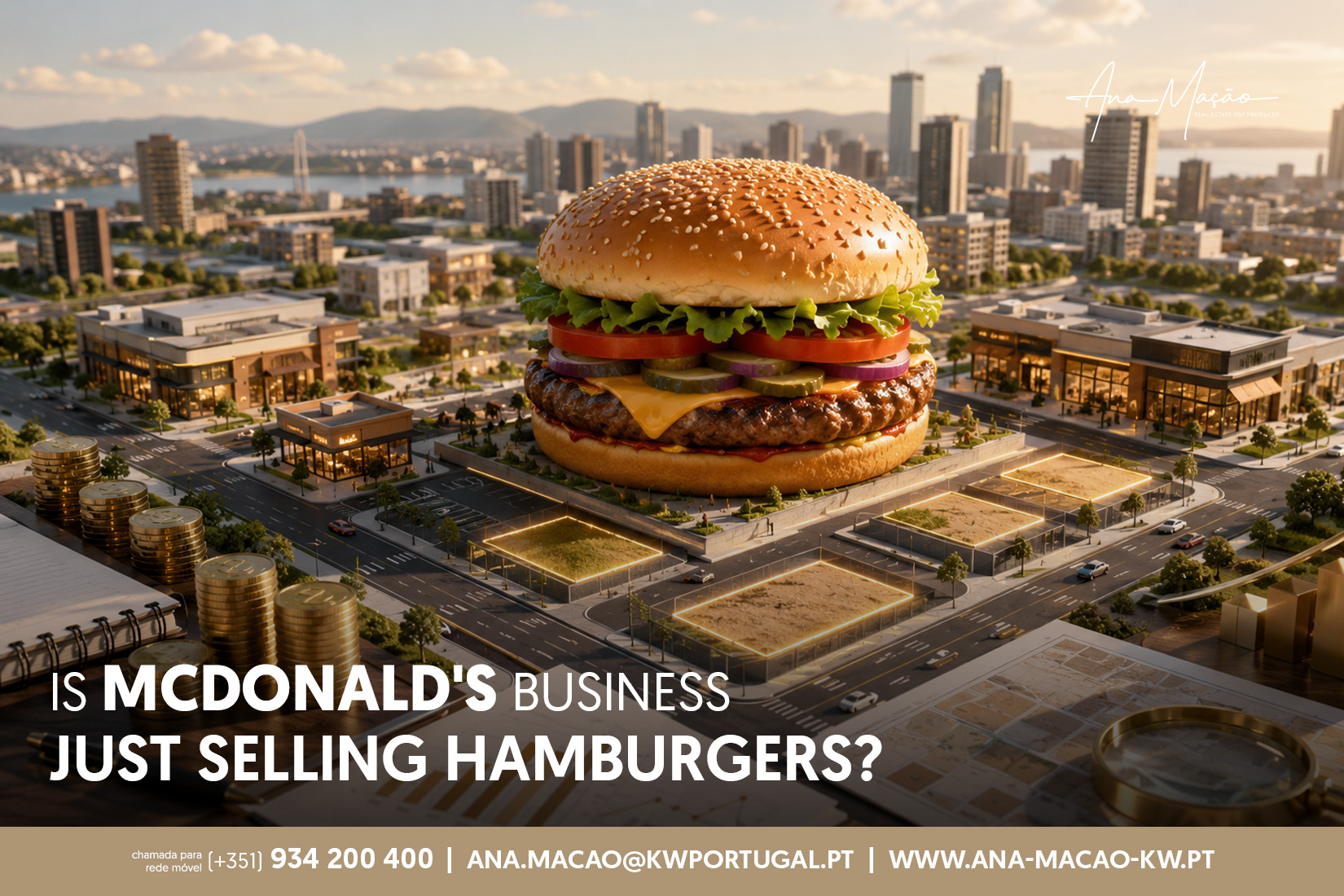
In fact, a very important part of the company's success is not just in selling hamburgers. It is in the location of the restaurants, on the land where they are built, and in the contracts that link the brand to its franchisees.
The curious question: is McDonald's a food company or a real estate company?
The most honest answer might be: it is both.
McDonald's became famous for the speed of service, the standardization of products, and the ability to replicate the same model in thousands of locations. But its true stroke of genius was realizing, very early on, that the point of sale was not just a restaurant. It was also a real estate asset.
In many countries, a large part of McDonald's restaurants operates through franchising. This means that the store is run by an independent operator who uses the brand, follows the group's rules, and pays the royalties stipulated in the contract. And this is where the story gets more interesting.
The hamburger pays the rent
In many cases, McDonald's controls the property where the restaurant operates. It may own the land, the building, or have a strong contractual position over that space. Then, instead of just charging for the use of the brand, it rents the location to the franchisee.
In other words: the franchisee sells hamburgers, manages teams, bears operational costs, and makes the business work day-to-day. But, at the same time, pays rent to McDonald's Corporation itself.
It's a very clever combination. The company benefits from the strength of the brand, the restaurant sales, and the real estate component. The property ceases to be just the place where meals are sold, transforming into a permanent source of income, whether more or fewer hamburgers are sold!
That is why it is often said that McDonald's is not just in the fast-food business. It is also in the real estate business.
Location is not a detail: it is the invisible product
In real estate, there is an old expression that remains current: location, location, location.
McDonald's understood this like few companies. A well-placed restaurant, in a historic area, a commercial zone, next to a busy road, near offices, schools, or high-traffic areas, has an advantage that no advertisement can replace.
The choice of location affects everything: customer volume, visibility, property value, growth potential, and even investment security.
Therefore, each restaurant is not just a sales unit; it is a strategic piece of its business. The brand does not just appear where there are people; it studies where people pass, where they stop, where they consume, and where the land value can make sense in the long term.
A model that reduces risks and increases predictability
Managing restaurants is demanding. There are costs with workers, raw materials, energy, maintenance, technology, deliveries, local marketing, and many other factors. Margins can fluctuate, and consumption can change with the economy, new food trends, or changes in family habits.
Fast-food? Yes. But also real estate investment.
There is something fascinating about this idea: while millions of people enter a McDonald's daily to buy a quick meal, the company benefits from physical assets, long-term contracts, and locations chosen with great precision.
Each restaurant can be seen as a small economic machine. It sells food, attracts movement, reinforces the brand, and sustains a real estate relationship.
Of course, this does not mean that McDonald's is just a disguised real estate company. The brand, logistics, marketing, technology, products, and customer experience remain fundamental. But it would be reductive to look at the company only as a hamburger chain.
By strongly betting on the franchising model, McDonald's transfers a large part of the risk to the franchisees, while maintaining relatively predictable revenue sources: royalties, commissions, and property rents.
The big lesson: the property can be more valuable than it seems
The story of McDonald's is curious because it shows something that also applies to the real estate market in general: sometimes, the true value is not just in the visible business.
- A café on a good corner may be worth more than it appears.
- A small store on a busy street can turn into a stable source of income.
- A well-located plot of land can gain value over time.
And a strong brand, installed in the right place, can multiply the economic importance of a space.
In the case of McDonald's, the hamburger is the product everyone sees. But the land, the store, the location, and the contract are an essential part of the financial engine.
What can we learn from this?
The main lesson is simple: in real estate, the use of a space is important, but the location and the business structure can be even more decisive.
A good real estate asset does not live only from the walls. It lives from the place where it is, the demand it can attract, the stability of the contracts, the ability to generate income, and how it integrates into people's lives.
McDonald's realized this early. It transformed restaurants into highly efficient commercial points and, at the same time, into pieces of a global real estate strategy.
Next time you pass by a McDonald's, you might see more than a hamburger store. You might see a very concrete example of how food, brand, and real estate can be brilliantly connected.
Because, in the end, there are businesses that sell products. And there are businesses that, while selling products, build heritage.