

The Friday, May 29th edition of the Diário da República brought legislative changes with a direct impact on the real estate and construction sector. On one hand, the Government is moving forward with a new revision of the urban licensing regime to accelerate projects, reduce bureaucracy, and strengthen the legal security of investments. On the other hand, more demanding rules come into effect for the identification and management of asbestos in construction, rehabilitation, and demolition works. These measures are also joined by a new package of tax incentives for housing, aimed at stimulating construction, rehabilitation, and residential leasing.
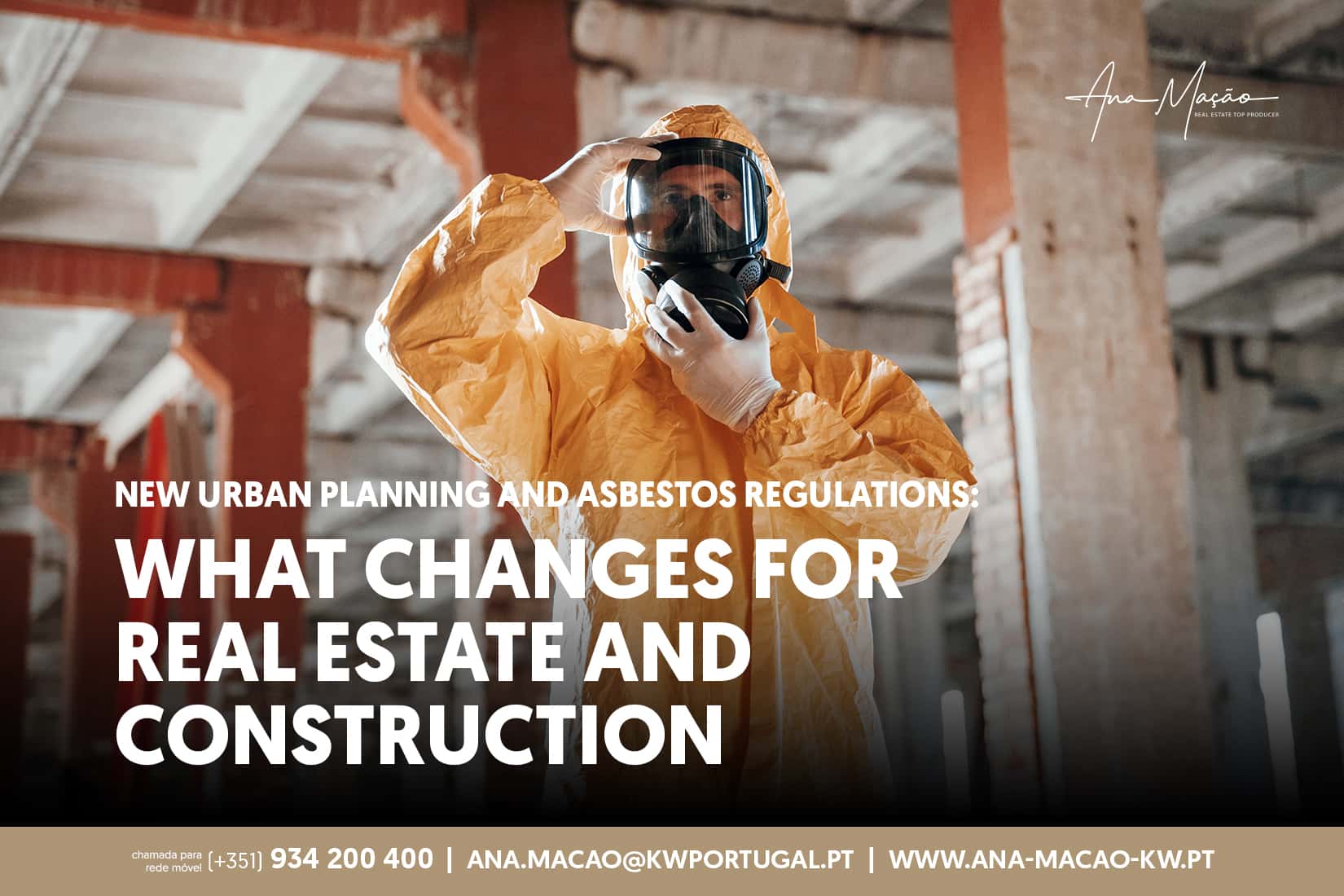
Although they concern different matters, both pieces of legislation point in the same direction: simpler administrative processes, but also greater technical accountability of the parties involved and strengthened safety requirements on site.
Urbanistic Licensing: New Phase of RJUE Reform
The main highlight goes to the Decree-Law No. 108/2026, approved under the legislative authorization granted by the Law No. 9-B/2026, which revises the regime applicable to the licensing of urban operations and amends the Legal Regime of Urbanization and Building (RJUE) and the Legal Regime of Urban Rehabilitation.
More than a simple technical update, this revision is part of the continuity of the so-called Urbanistic Simplex, whose main goal is to reduce bureaucracy, speed up decisions and make procedures more predictable for those who invest, build or rehabilitate.
The legislation seeks to correct some application difficulties after the changes introduced in 2024, while simultaneously reinforcing the objectives of administrative simplification and increasing housing supply.
Among the measures provided are the flexibility of procedures, streamlining of deadlines, clarification of legal concepts, improvement of coordination between public entities, and the creation of mechanisms that allow greater legal security in urban processes.
Also noteworthy are the changes related to the instruction of processes, procedural sanitation, prior hearings of interested parties, urban infractions, supervision, and mechanisms for restoring urban legality.
Faster Processes and Greater Predictability

One of the main concerns of this legislative package is to reduce delays that often constrain the development of real estate projects. To this end, the reform strengthens coordination mechanisms between public entities and invests in a more uniform and predictable processing.
At the same time, the new framework seeks to ensure more robust and legally stable urban titles, reducing situations of uncertainty that often affect investors, developers, and owners.
Particularly relevant is the focus on solutions that limit the administrative blockage of processes, reinforcing the use of prior communication in certain situations and reducing the dependence on express administrative acts when urban parameters are already clearly defined.
Less Bureaucracy, More Responsibility

One of the trends consolidated by this reform is the gradual transfer of responsibility to the technicians and developers involved in the projects.
The model being developed seeks to reduce part of the prior administrative control and strengthen the accountability of the parties involved through technical declarations, terms of responsibility and simplified processing mechanisms, while maintaining instruments of supervision and control.
In practice, this means that architects, engineers, project coordinators, site managers, and developers will play an even more relevant role in ensuring compliance with urban and technical standards.
For industry professionals, administrative simplification does not reduce the demand. On the contrary: the faster the process becomes, the greater the importance of technical rigor, document quality, and compliance of the submitted projects.
Asbestos: Stricter Rules for Works and Rehabilitation

The second relevant legislative change comes through the Decree-Law No. 109/2026, which transposes into Portuguese legislation the Directive (EU) 2023/2668, concerning the protection of workers against the risks of asbestos exposure at work.
The topic is of particular importance knowing that in Portugal a significant part of the building stock was constructed in periods when materials containing asbestos were commonly used, especially in roofs.
According to the European Union itself, the risks remain particularly relevant in building renovation activities, demolitions, waste management, technical maintenance, and urban rehabilitation.
The new rules accompany the latest scientific and technological developments in this area and strengthen mechanisms for the prevention, monitoring, and protection of workers potentially exposed.
The new legislation does not merely update general safety principles. The changes directly address risk assessment, prior identification of materials that may contain asbestos, monitoring of fiber concentration in the air, worker training, and mandatory communications to competent authorities.
Requirements related to occupational exposure limits and measures to be adopted whenever there are health risks to workers are also reinforced, reflecting the growing European concern with the prevention of diseases associated with asbestos exposure, particularly in relation to cancer.
Fiscal Measures for Housing: Main Approved Incentives

Alongside changes in urbanism and the update of rules related to asbestos, the Decree-Law No. 97/2026 was also published, which introduces a set of fiscal incentives aimed at boosting construction, rehabilitation, acquisition, and rental housing.
The goal is to increase the housing supply by reducing the tax burden at different stages of the real estate cycle, making investment in housing at moderate costs more attractive.
Among the most relevant measures are:
- The temporary application of a reduced VAT rate of 6% to certain construction and rehabilitation contracts intended for sale for own and permanent housing or rental housing, provided they meet legal requirements. The measure could result in a significant reduction in the development costs of new projects.
- A regime of partial VAT refund borne by individuals in the construction of own and permanent housing, as well as new incentives for investment in the rental market.
- The creation of Investment Contracts for Rental (CIA), a new regime aimed at attracting capital for the construction, acquisition, or rehabilitation of properties intended for rental housing. Among the benefits provided are exemptions or reductions in IMT, IMI, AIMI, and Stamp Duty, in addition to access to the reduced VAT rate in certain situations.
- More favorable taxation in the rental market for certain rental income with the new Simplified Affordable Rental Regime (RSAA), seeking to reduce bureaucracy and increase the supply of available properties.
- The limit for rent deduction in IRS gradually increases to 900 euros in 2026 and to 1,000 euros from 2027, reinforcing support for families living in rented homes.
Overall, these measures represent one of the most comprehensive packages of fiscal incentives for housing in recent years, seeking to mobilize private investment and increase the available supply in the market.
What Do These Changes Mean for the Market?

Despite operating in different areas, these pieces of legislation ultimately converge on a common goal: to modernize the sector.
For developers, investors, technical offices, contractors, and owners, the message is clear: the simplification of procedures does not eliminate responsibilities. On the contrary, it requires greater technical preparation, greater document rigor, and increasing attention to compliance with the rules.
Before proceeding with new projects, it is worth reviewing internal procedures, updating work methodologies, and closely monitoring the regulations that are now beginning to take effect. As for the package of fiscal measures, time will tell whether they will have enough weight in facilitating access to housing, a problem that has been worsening, year after year, legislative package after legislative package.
In real estate, many of the changes that shape the market do not start in construction sites or deeds. They begin in the pages of the Diário da República and end up influencing the way projects are conceived, licensed, built, and marketed.