

There are luxuries that require reservations, travel, and logistics that are not always easy. Others are just on the other side of the living room door. Dining outdoors at home belongs to the second category: a simple table, the right lighting, and a warm night can give the meal an unexpected holiday flavor.
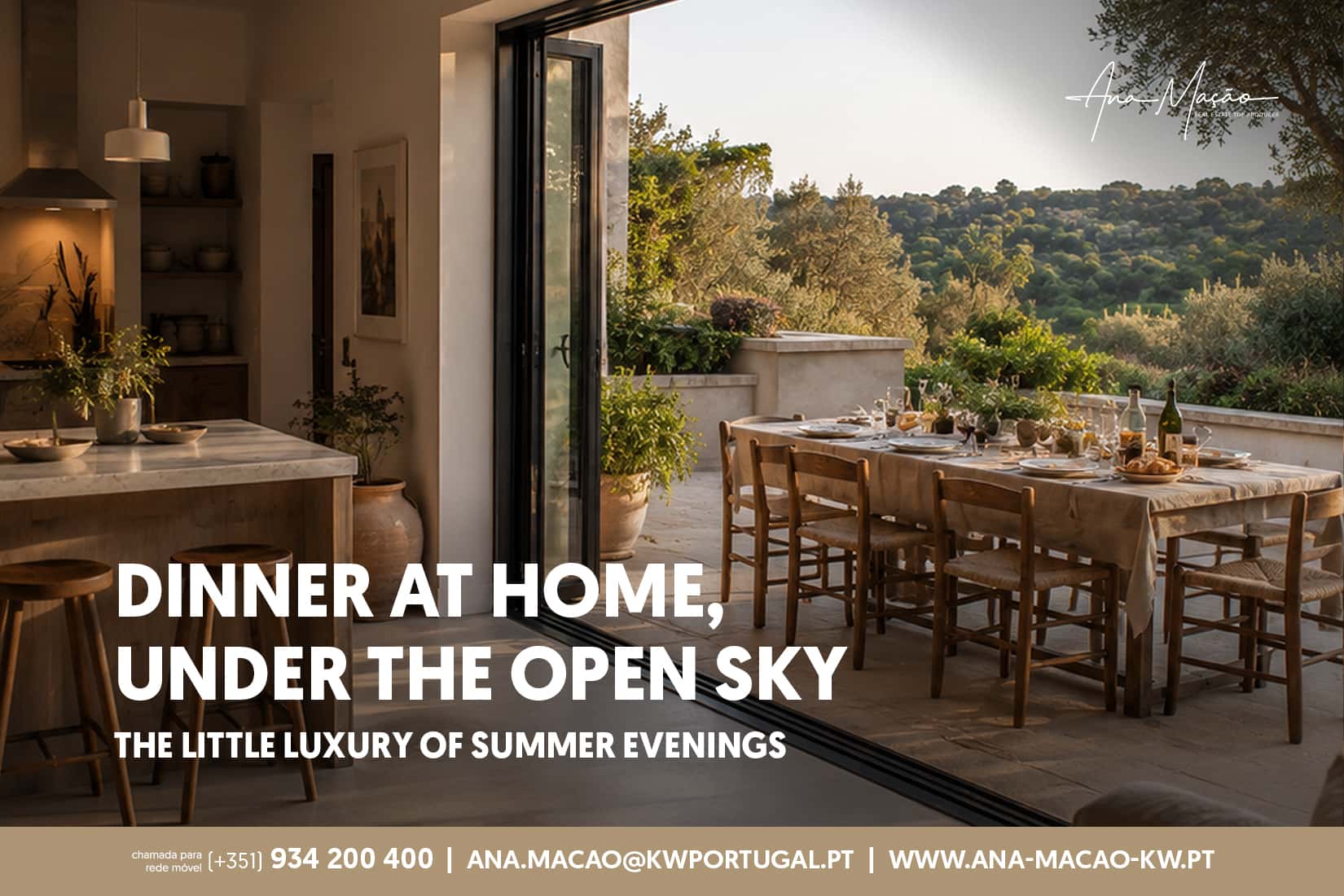
But what ultimately makes an outdoor dining area successful? It's important to choose a sheltered location close to the kitchen, use warm and low lighting, keep the table simple, prefer stable pieces, and organize the service before everyone sits down. It's not necessary to build an outdoor kitchen worthy of a restaurant. The space needs to work.
Luxury begins before setting the table
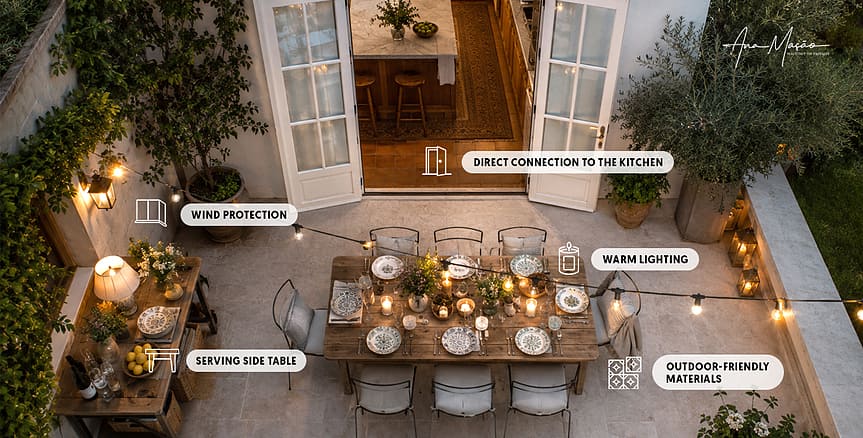
A good dinner on the terrace doesn't start with the dishes. It starts with the path between the kitchen and the outdoors.
When the table is near the door, without inconvenient steps or obstacles along the way, the dishes arrive hot, and the host doesn't spend half the night making trips inside the house. By the third trip with a platter in hand, the Mediterranean experience can turn into a small endurance test ;)
It's also important to consider the shade, wind, and circulation. Chairs should be able to move back without hitting a wall, a pot, or, worse yet, the guest sitting behind.
A table with personality, not a showcase
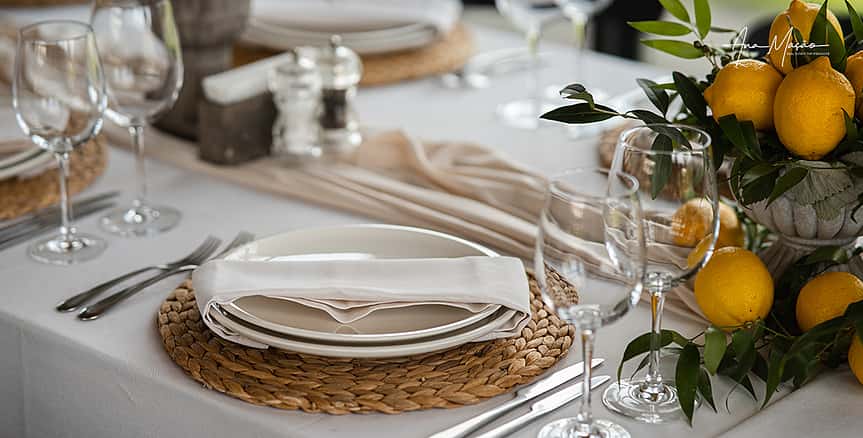
Summer tables are less concerned with matching everything and more interested in telling a story. Colorful fabrics, handmade ceramics, different glasses, bamboo, wicker, and vintage pieces create a more personal and less formal atmosphere.
The trends for 2026 point precisely to compositions with layers, a mix of materials, and details gathered over time.
A simple formula usually works: a neutral base, two colors, and a natural element. It could be a light linen tablecloth, yellow and blue napkins, ceramic plates, and a bowl of lemons. Low flowers, aromatic herbs, or olive branches also decorate without hindering conversation.
The table doesn't need to look ready for a photo shoot. It needs to invite you to sit down.
Lighting decides if the night continues
Bright white light can turn dinner into a waiting room. Too dim light, on the other hand, forces everyone to guess what's on the plate.
The ideal is to combine warm light near the table with small points of light around: a rechargeable portable lamp, lanterns on the floor, discreet wall lighting, or a string of lights under a pergola create depth and comfort.
Lighting is a central element in outdoor spaces because it extends their use after sunset.
Candles add charm, but in windy areas, versions protected by glass or with LED flames prevent the romance from lasting only 20 seconds.
The wind also accepts the invitation
Low centerpieces, glasses with some thickness, napkins held by rings, and discreet weights on the tablecloth prevent small chases around the terrace.
A slatted panel, a side awning, tall pots, or well-placed vegetation can create protection without turning the space into a fortress.
Glazed ceramics are beautiful and stable, high-quality acrylic can be useful near pools or when there are children, and washable fabrics make life easier. Everything left outside should withstand the sun, humidity, and real use, not just the first photograph.
Serving well without spending the night standing
The best summer menu is the one that allows the host to sit down. Dishes to share, salads, grilled foods, bread, fruit, and desserts prepared in advance reduce trips to the kitchen.
A console, a cart, or a small side table near the door can hold water, drinks, bread, cutlery, and extra dishes. Bringing food outside in stages keeps the table lighter and the service more natural.
After all, hosting well doesn't mean spending the entire dinner serving others.
A terrace is valuable for how it connects to the house
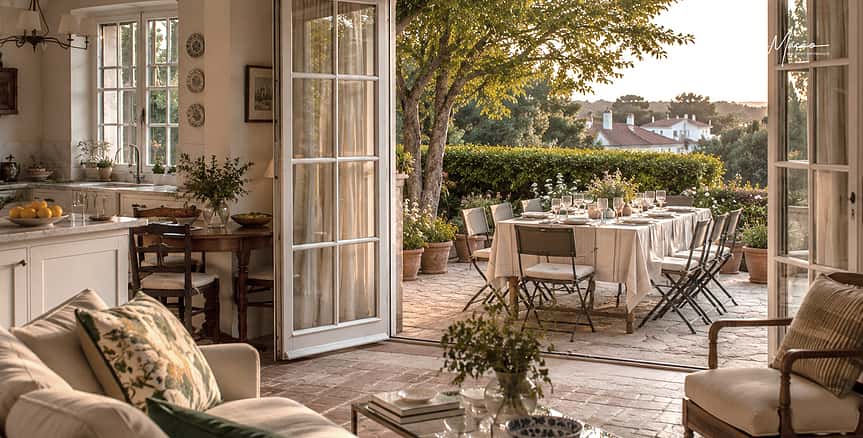
As a real estate consultant, I often see buyers excited about the size of a terrace and, minutes later, realizing that its use is not so simple.
A large exterior, but far from the kitchen, without shade, without privacy, and with a narrow door, can be less useful than a compact balcony opening directly to the living room.
Quality is measured by ease of use:
- Is there space for a table?
- Is the connection to the kitchen direct?
- Is there light, an outlet, shade, and some wind protection?
- Is circulation comfortable?
The exterior design of more recently built houses reinforces this continuity, with outdoor areas designed as functional extensions of the house, not as isolated square meters.
In a real estate ad, square meters catch the eye. During the visit, however, it's the possible life in that space that wins over the buyer. A well-placed table, doors open to the living room, and pleasant lighting immediately explain what the terrace is for.
In the end, true luxury is not in an expensive outdoor kitchen or a perfect table. It's in the ease with which dinner starts and ends up lasting into the night. When no one is in a hurry to leave the terrace, the space is fulfilling its function.