

The Portuguese real estate market reaches May 2026 still on the rise. But this is no longer a market where just "entering" ensures success. Buying, selling, or investing still makes sense in many cases, but it requires more analysis, better data interpretation, and a very clear notion of the right price.
The demand remains strong, especially in consolidated urban areas, and the available supply is still not enough to ease the pressure. Lisbon remains at the center of this dynamic, but the movement is already felt in other cities and peripheral areas with good access, services, and quality of life.
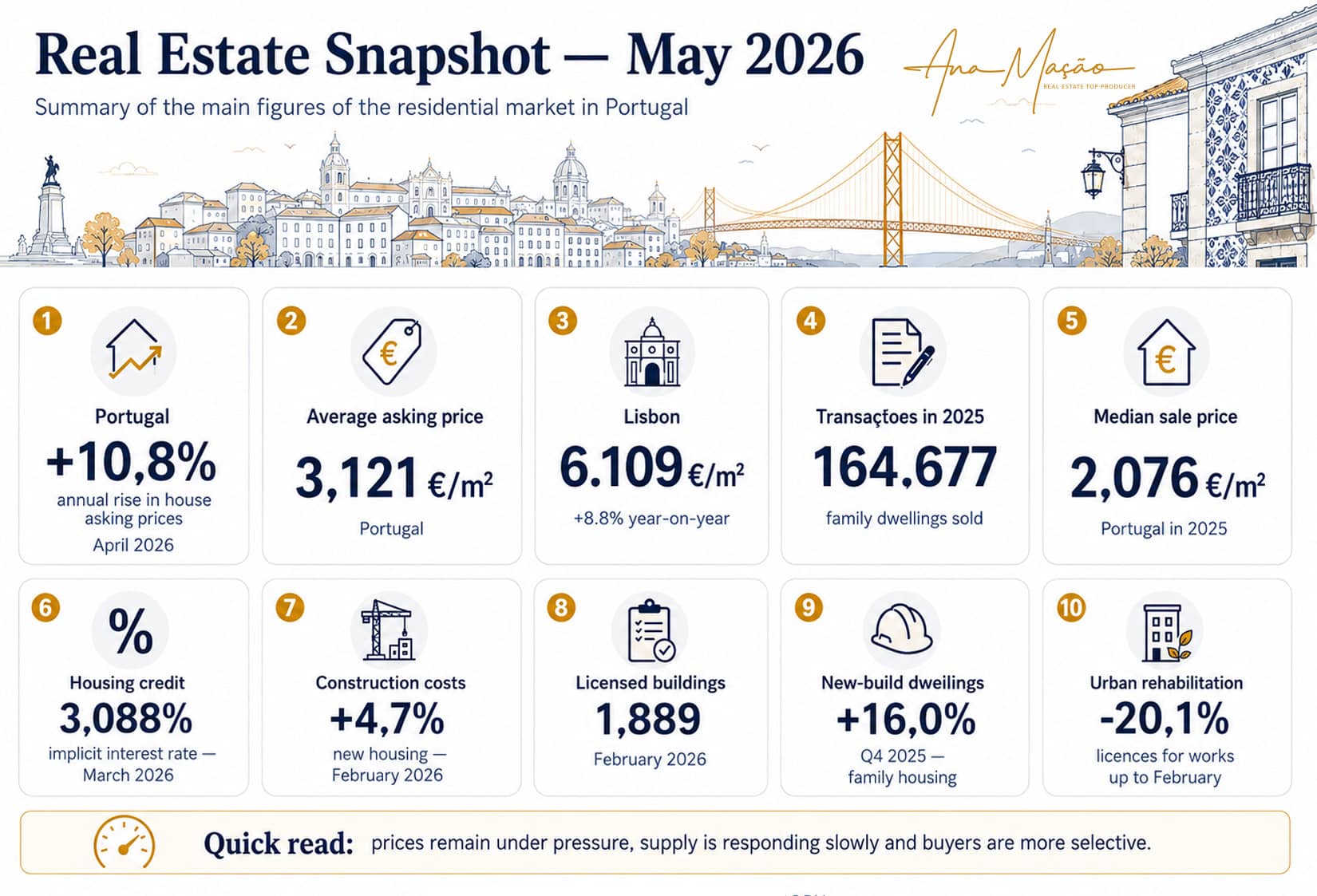
The Real Estate Market in 10 numbers - May 2026
Lisbon remains expensive and continues to set the pace
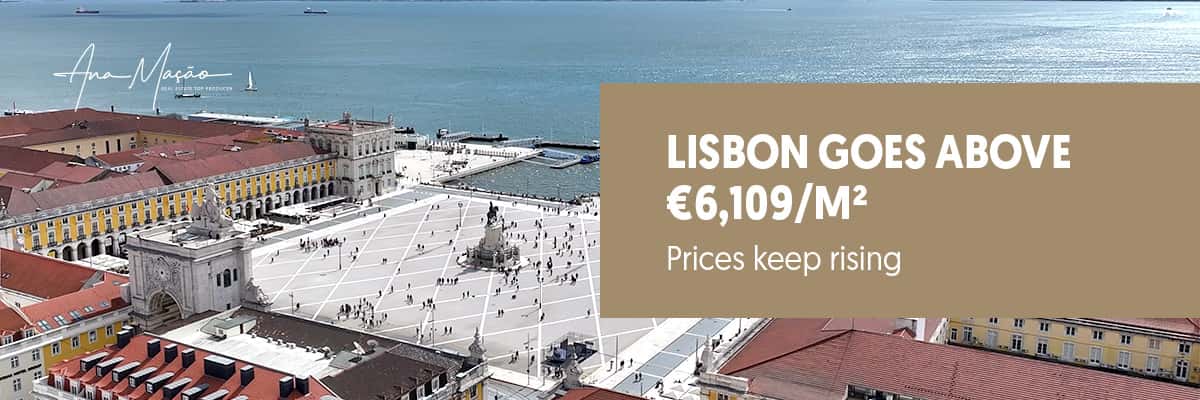
Lisbon remains the most expensive residential market in the country.
According to idealista, in April 2026, the median price of homes for sale in the capital reached 6,109 €/m², 8.8% more than in the same month of the previous year.
Porto also continued to rise, with 4,044 €/m² and an annual increase of 8.1%.
However, it is important to distinguish two readings: idealista measures offer prices, i.e., values requested in advertisements; INE measures actual sale prices. And here too, the pressure is clear. In 2025, the median price of family housing sales in Portugal was 2,076 €/m², 16.8% more than in 2024.
In the 4th quarter of 2025, INE indicated a national median price of 2,198 €/m². Among the most expensive municipalities, Lisbon reached 5,198 €/m², Cascais 4,654 €/m², and Oeiras 4,225 €/m². These numbers help explain why demand has shifted to areas near the capital, without weakening the Lisbon market.
Support for young people increases demand in a market with little supply

Support measures for young people buying their first home became a very important factor in the market in 2025 and 2026. The exemption from IMT and Stamp Duty, the public guarantee on housing credit, and the Young IRS allowed many young people, up to 35 years old, to access the purchase market.
According to the Government, the exemption from IMT and Stamp Duty has already supported more than 77,000 young people since the creation of this regime.
In 2025 alone, 60,947 young people benefited from the measure in the purchase of 41,370 properties for own and permanent housing, with an average acquisition value of 205.7 thousand euros.
The public guarantee also had strong adherence: in 2025, more than 25,000 housing credit contracts were signed under this regime (42% of contracts for young people up to 35 years old). By March 2026, 905 million euros of the public guarantee had already been used, equivalent to 62% of the available amount.
These supports help to overcome a real barrier: the initial entry and the fiscal costs of the purchase. But they have an important secondary effect: by increasing purchasing capacity, they stimulate demand in a market where supply remains scarce.
Therefore, part of this benefit may end up being absorbed by the consequent price increase, especially in areas with more pressure. The Bank of Portugal has signaled concern about the increased risk in credit associated with the public guarantee, while the IMF criticizes the Young IRS for creating distortions and not presenting clear evidence of effectiveness.
The conclusion is simple: supporting young people is fundamental; however, without an increase in housing supply, the measure can be counterproductive and exacerbate the imbalance between supply and demand.
The buyer is more attentive to real value

The market remains favorable for sellers, but there is an important difference compared to previous years: the buyer is more informed and less willing to pay any price just because "the market is rising."
Today they compare areas, simulate credit, evaluate condominium costs, works, energy efficiency, transport, and resale potential.
A well-located, well-presented property with an adjusted price continues to generate demand. But a property with a price clearly above the market may remain unsold for longer, even in a context of appreciation.
This is one of the central ideas of 2026: the market is strong but more demanding. Location remains decisive, but it is no longer enough by itself. Functionality, condition, solar exposure, storage, balcony, parking, and energy efficiency have gained weight in the decision.
Credit: the filter before the visit

Housing credit remains one of the major filters in the market. In March 2026, the implicit interest rate on all housing credit contracts rose slightly to 3.088%, after several months of decline.
Even when rates ease compared to more difficult periods, the monthly payment continues to condition many decisions. The effort rate, the initial entry, insurance, taxes, and deed costs weigh more and more on family budgets.
In practice, many buyers already enter the market with the financial decision made before the emotional decision and with credit pre-approval guaranteed. First, they want to know how much they can pay. Only then do they choose the house.
Supply: there are positive signs, but the effect is not immediate
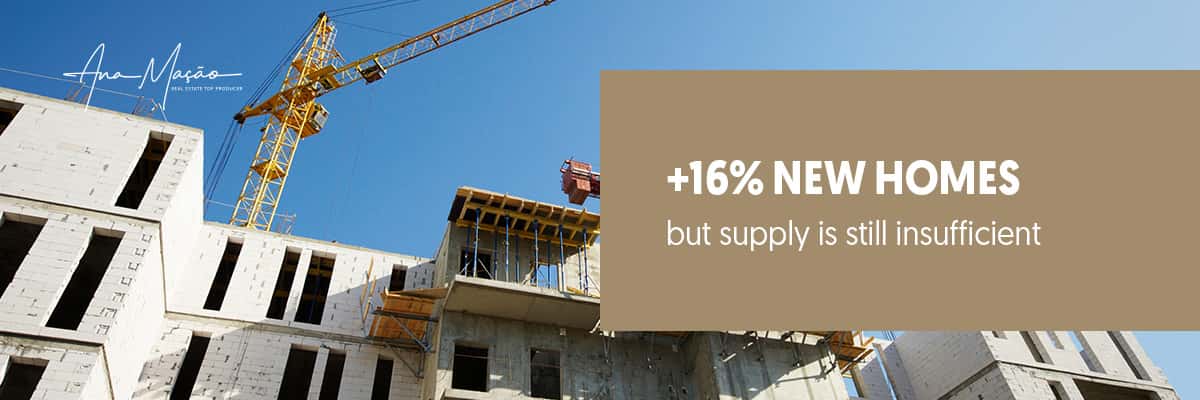
On the supply side, the data shows a less simple reality than it seems. In February 2026, INE indicated 1,889 buildings licensed in Portugal.
Already in the 4th quarter of 2025, the number of licensed buildings fell by 14.2%, to 5.8 thousand buildings, and the licensing of buildings for new constructions fell by 11.4%.
But there is an important counterpoint: in the family housing segment, licensed units in new constructions increased by 16.0%. This suggests that fewer buildings may be approved, but with more houses per project.
It is good news, but with caution. A license today is not a house available tomorrow. Between licensing, construction, commercialization, and final delivery, the path can be long. Therefore, even if more units are planned, the pressure on prices may remain for some time.
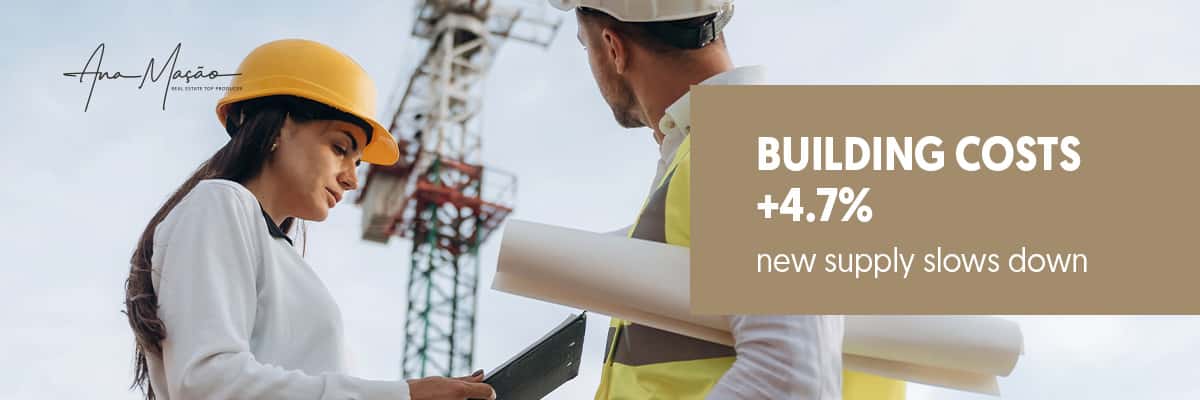
Moreover, building remains more expensive. In February 2026, the costs of constructing new housing rose by 4.7% year-on-year, with labor increasing by 8.2% and materials by 1.7%. This detail is important because it helps explain why the new supply is slow to reach the market at more affordable prices.
Urban rehabilitation: a yellow signal
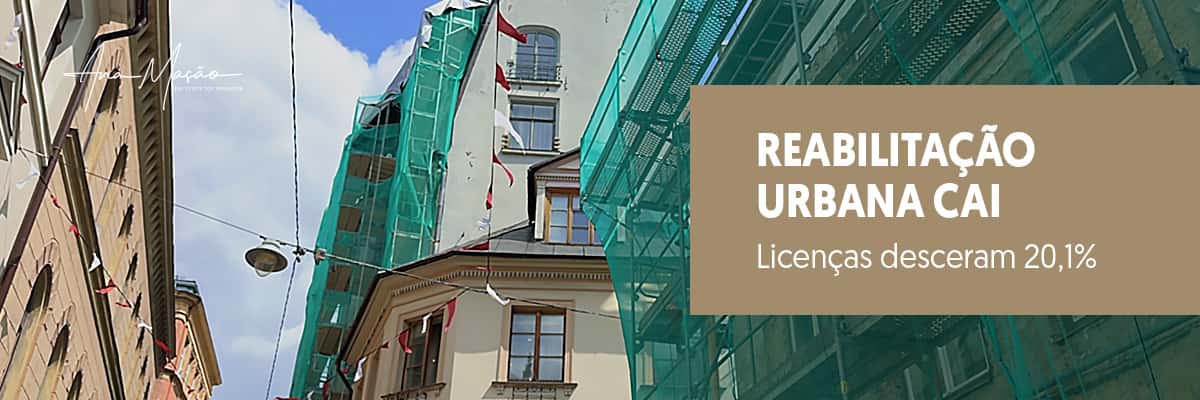
Urban rehabilitation also deserves attention in this snapshot. According to data from AICCOPN, cited by Jornal de Negócios:
the sector slowed down at the end of the 1st quarter of 2026: the level of activity fell by 0.8% year-on-year and the order book fell by 1.4%.
The most significant data is in licenses. By February, licenses for rehabilitation works fell by 20.1% compared to the same period of the previous year, with a decrease of 15.5% in the residential segment and 26.9% in the non-residential segment.
This is relevant because rehabilitation is one of the most important ways to recover buildings and return houses to the market, especially in consolidated areas where there is little space for new construction. If rehabilitation slows down, the supply-side response may also be slower.
Investing in 2026 requires less enthusiasm and more calculations

For investors, the market remains interesting, but it is more selective. The logic should no longer be to buy just because "real estate always goes up."
The focus should be on location, zone liquidity, rental demand, property condition, maintenance costs, taxation, and future resale capacity.
Models like Build-to-Rent, projects with stable income, and properties well-positioned for rental continue to gain attention. But the investor of 2026 tends to seek more security and less promise of quick appreciation.
A house in an area with good transport, nearby services, and constant demand tends to offer more stability than an apparently cheap property but with low liquidity or heavy renovation needs.
What does this mean for buying, selling, or investing?

- For those who want to buy, preparation is essential. Validating credit before visiting properties, comparing areas, and understanding the fair market value can avoid bad decisions.
- For those who want to sell, the moment remains favorable, but the entry price into the market should be well calculated. The first weeks remain decisive for generating attention, visits, and proposals.
- For those investing, the opportunity continues to exist, but it should be analyzed rigorously. In 2026, the difference is increasingly between buying a property with real potential and buying just because the market seems to be on the rise.
Conclusion: strong market, but more demanding

The Real Estate Snapshot of May 2026 shows a market still appreciating, with Lisbon leading prices, insufficient supply, and more rational buyers.
There are positive signs in new construction, but the impact will be gradual. Urban rehabilitation shows signs of slowing down. Credit continues to weigh. And construction costs help keep the new supply pressured.
At the core, the market is not stagnant. It is more mature, more demanding, and less tolerant of poorly prepared decisions. Buying, selling, or investing still makes sense, but the advantage is increasingly in knowing how to read the numbers before making the decision.
Sources consulted:
- idealista — House prices for sale in Portugal, April 2026
- idealista / INE — Median prices of family housing sales in 2025
- INE — Construction and Housing
- INE — Implicit interest rates on housing credit, March 2026
- INE — Costs of new housing construction, February 2026
- Jornal de Negócios / AICCOPN — Urban rehabilitation in the 1st quarter of 2026